Project Outcomes
New publication from the InnoBMS project: Impedance-based methodology for early detection of Thermal Runaway in Li-ion batteries

As part of the InnoBMS project, a new article has recently been published, titled “Impedance-based Thermal Runaway early detection methodology for Lithium-Ion batteries”, on the International Journal of Electrical Power & Energy Systems.
In this work, a novel approach is presented, to improve battery safety through the use of Electrochemical Impedance Spectroscopy (EIS). The study investigates how tracking battery impedance during the onset of a Thermal Runaway (TR) event can enable its early detection and thus enhance the State-of-Safety estimation in Li-ion batteries.
The research demonstrates that EIS can identify TR events earlier than existing gas-sensing detection methods. Through a combination of Accelerating Rate Calorimetry (ARC) tests and abuse testing, the methodology proves effective for both fast-paced and slow-paced TR scenarios. Results show that:
- The impedance-based method detected TR 15 hours before explosion in slow-paced events.
- It also outperformed commercial gas-sensing methods in rapid TR events, providing a warning time that complies with R100 Rev3 regulations (at least 5 minutes).
This work marks an important step towards safer and more reliable Battery Management Systems (BMS) for automotive and stationary applications.
Read the article here
Other Projects
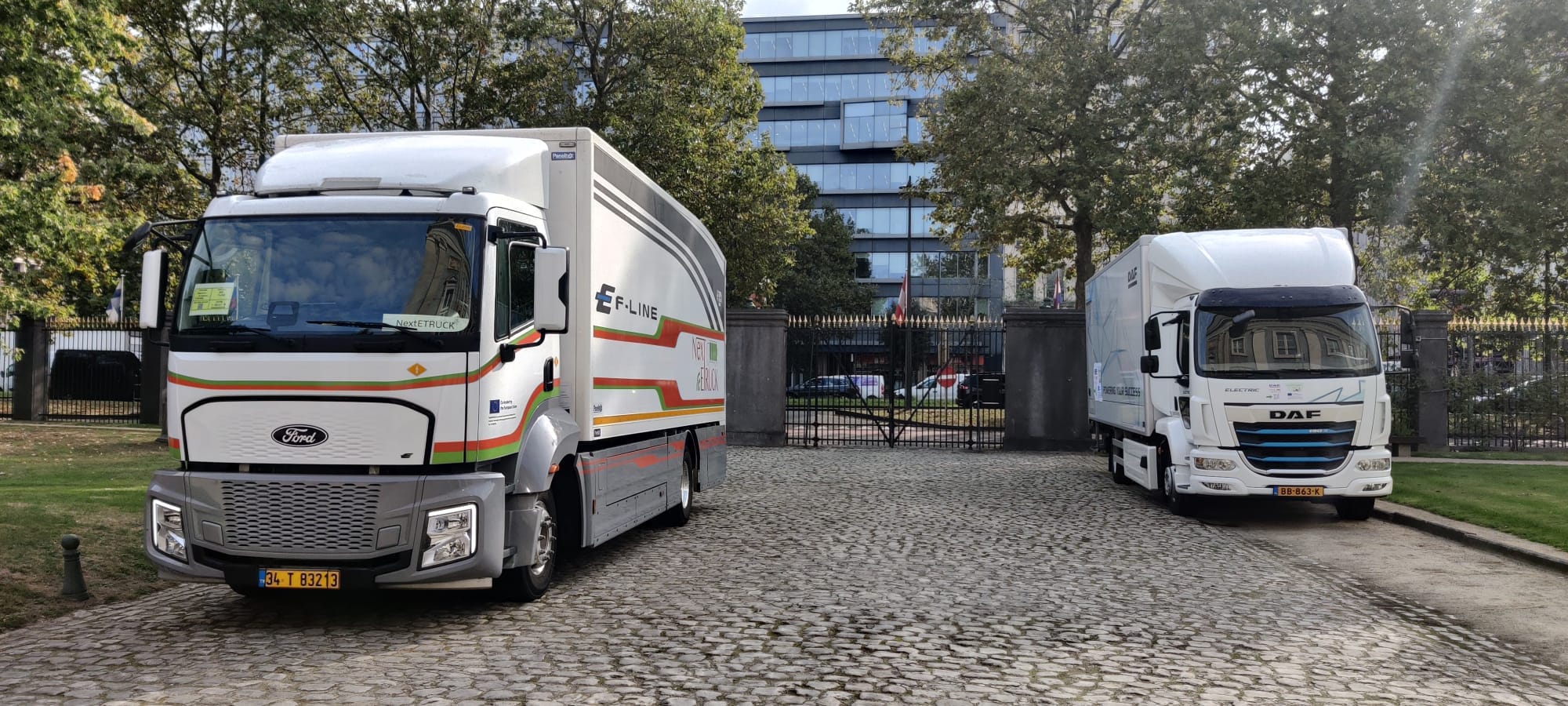
NextETRUCK Final Event: Delivering evidence and insights for the transition to zero-emission freight
The final event of NextETRUCK showcased what four years of demonstration, testing and evaluation can deliver when innovation is assessed in real operating conditions rather than in controlled environm...
Read more
InnoBMS New Publication on V2X Scenarios for Future-Proof Battery Management Systems
The 2ZERO Partnership is pleased to highlight a new open-access publication emerging from the Horizon Europe-funded InnoBMS project. The study, “Analysis of V2X Scenarios for Future-Proof Battery Ma...
Read more
New iBattMan publication advances battery health diagnostics for next-generation EVs
Battery health assessment is one of the key enablers for accelerating the adoption, sustainability, and long-term performance of battery electric vehicles (BEVs). Although current Battery Management S...
Read more