
How ZEvRA is advancing circular composite materials for the automotive sector
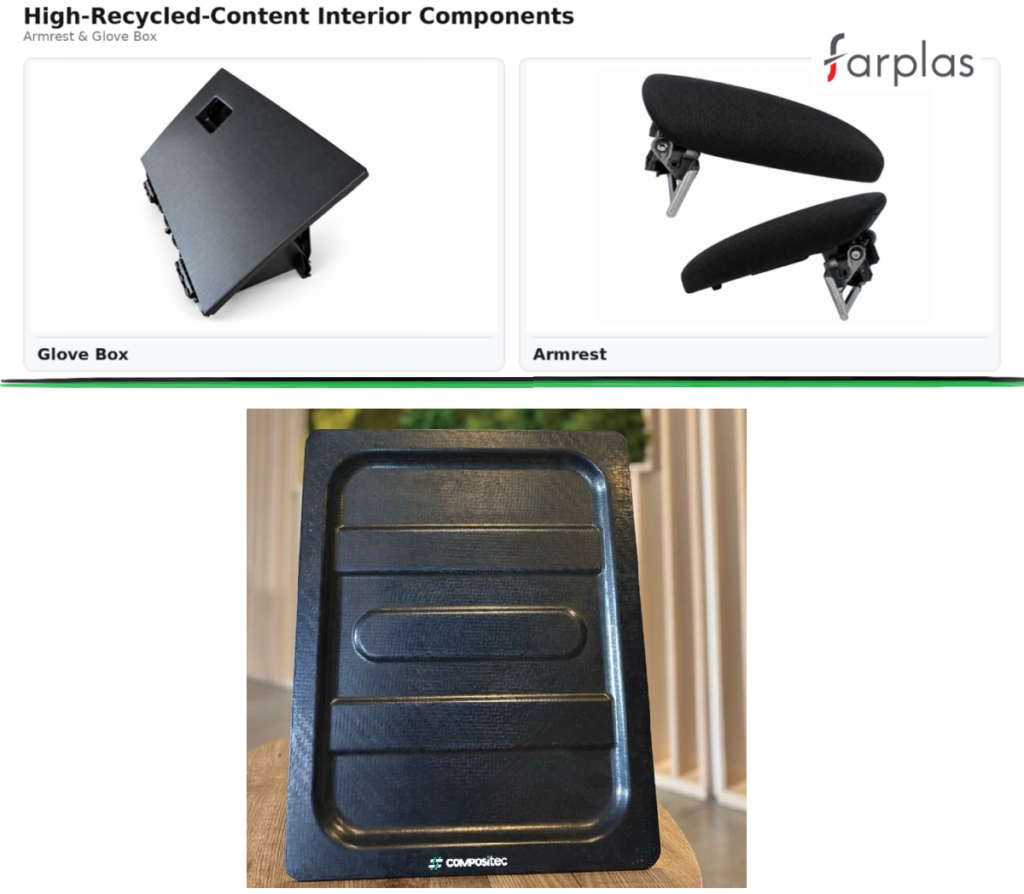
The ZEvRA project is helping to accelerate the transition towards circular vehicle manufacturing by demonstrating how high-recycled-content composite materials can meet the demanding technical requirements of automotive applications. Two recent developments led by project partners provide evidence that circular composites have the potential to move beyond research and into industrial deployment.
- The first example comes from Farplas, working in collaboration with VTT, with Toyota and Škoda as demonstrator partners. The team has developed interior vehicle components such as armrests and glove boxes containing more than 70% post-consumer recycled (PCR) material by weight. Different formulations were tailored for each application, combining recycled ABS, mineral-filled polypropylene (PP), and glass-fibre-reinforced PA6 to achieve the required mechanical and thermal properties. Following extensive testing and scale-up activities, the latest material formulations contain up to 78% PCR content in mineral-filled PP, 81% in ABS, and 90% in short-glass-fibre-reinforced PA6. The materials and components have already been manufactured and are currently undergoing validation against OEM performance requirements. Testing includes tensile, impact and thermal characterisation at material level, alongside durability, overload and thermal cycling assessments at component level. Supported by advanced simulation tools, the work demonstrates that high-recycled-content materials can satisfy both sustainability targets and strict automotive performance standards.
- A second example is being developed by Compositec together with Stellantis and RISE. The partners have created a thermoplastic composite battery pack top cover for the Škoda Enyaq, designed to fulfil requirements related to fire resistance, electromagnetic compatibility, mechanical performance and long-term durability. Using recycled PET-based organosheets combined with glass-mat thermoplastics (GMT), the new design offers significant advantages compared with conventional solutions. The resulting battery cover weighs 12.5 kg, making it 6.3 kg lighter than the steel-and-mica reference design. The solution also eliminates the need for a separate insulation layer and electrocoating process while reducing the estimated carbon footprint from approximately 55 kg CO₂ equivalent to between 10 and 20 kg CO₂ equivalent. Recycled content reaches up to 95%.
These developments provide tangible proof that circular composite materials can successfully transition from laboratory research to real automotive applications. Through the combination of high recycled content with robust technical performance, the solutions developed within ZEvRA demonstrate a viable pathway towards more sustainable, resource-efficient and circular vehicle production.
Curious to know more about the latest developments from ZEvRA? Read the latest newsletter here.
Other Projects
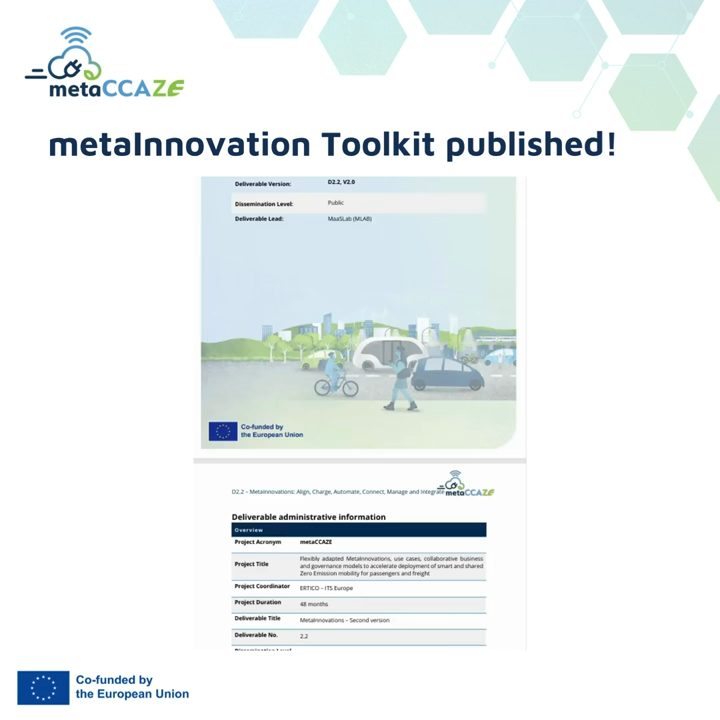
metaCCAZE reports the advances of its innovative mobility solutions
The project metaCCAZE has published a new Deliverable presenting the latest progress of its metaInnovations portfolio. The publication ' D2.2 – MetaInnovations: Align, Charge, Automate, Connect, Man...
Read more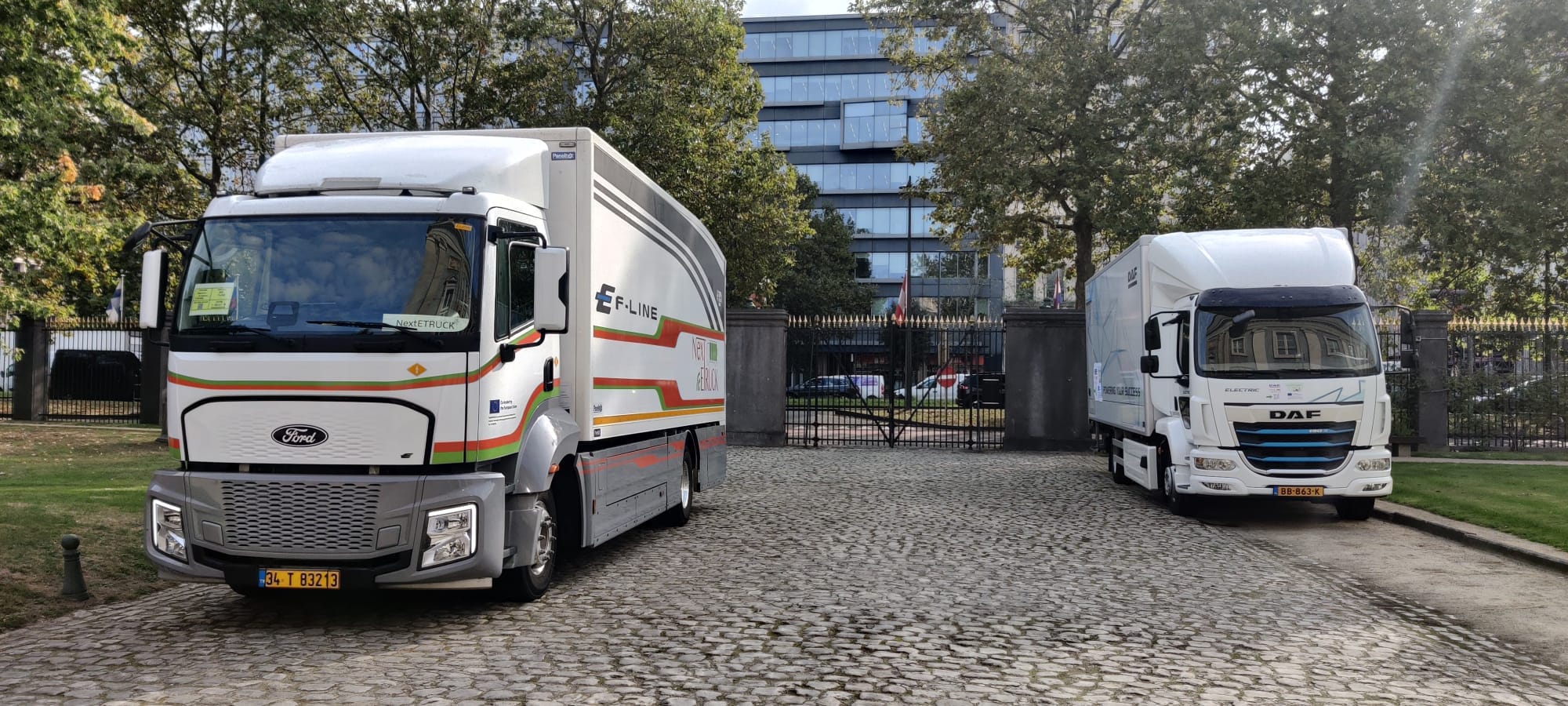
NextETRUCK Final Event: Delivering evidence and insights for the transition to zero-emission freight
The final event of NextETRUCK showcased what four years of demonstration, testing and evaluation can deliver when innovation is assessed in real operating conditions rather than in controlled environm...
Read more
InnoBMS New Publication on V2X Scenarios for Future-Proof Battery Management Systems
The 2ZERO Partnership is pleased to highlight a new open-access publication emerging from the Horizon Europe-funded InnoBMS project. The study, “Analysis of V2X Scenarios for Future-Proof Battery Ma...
Read more