FLOW new deliverable D5.4 “Key recommendations on new policies and regulation to boost effective VGI of millions of EVs”

The transition from unmanaged EV charging to smart, bidirectional Vehicle-Grid Integration (VGI) is becoming a critical pillar of Europe’s clean energy transformation. The FLOW Project deliverable “Shaping the Future of Vehicle-Grid Integration: Key Recommendations on New Policies and Regulation” sets out a comprehensive framework to accelerate this shift through targeted policy and regulatory action.
Today, most electric vehicles are still charged in an “uncontrolled” way, where charging starts immediately at maximum power and continues until the battery is full. While simple and historically effective for ensuring mobility needs, this approach creates unnecessary peak demand on electricity networks and leaves vehicles idle but still connected. More advanced smart charging strategies, combined with bidirectional capabilities, offer the opportunity to optimise charging times, reduce costs, support grid stability, and even enable EVs to feed electricity back into the system.
Despite strong technical progress, these solutions are still not widely available at scale. The FLOW analysis highlights that the main barriers are not only technical, but also regulatory, market-related, and organisational. To address this, experts from Ricerca sul Sistema Energetico (RSE), supported by energy market simulations for a 2030 Italian scenario and feedback from the V2X Cluster, have identified actionable recommendations to unlock EV flexibility.
A key outcome of the work is the mapping of policy recommendations across 15 real-world VGI use cases, spanning both:
- Behind-the-meter (off-market) solutions, which optimise energy use locally and maximise benefits for end-users
- Market-based or aggregator-driven solutions, which enable EV flexibility to be traded in energy and ancillary service markets
This dual approach highlights a clear pathway toward mass-market deployment, ensuring that VGI can deliver value both at household level and within wider energy systems.
The deliverable ultimately provides guidance for policymakers and regulators on how to move from pilot demonstrations to scalable implementation, enabling EVs to become active and flexible components of future energy systems.
Access the deliverable here
Other Projects
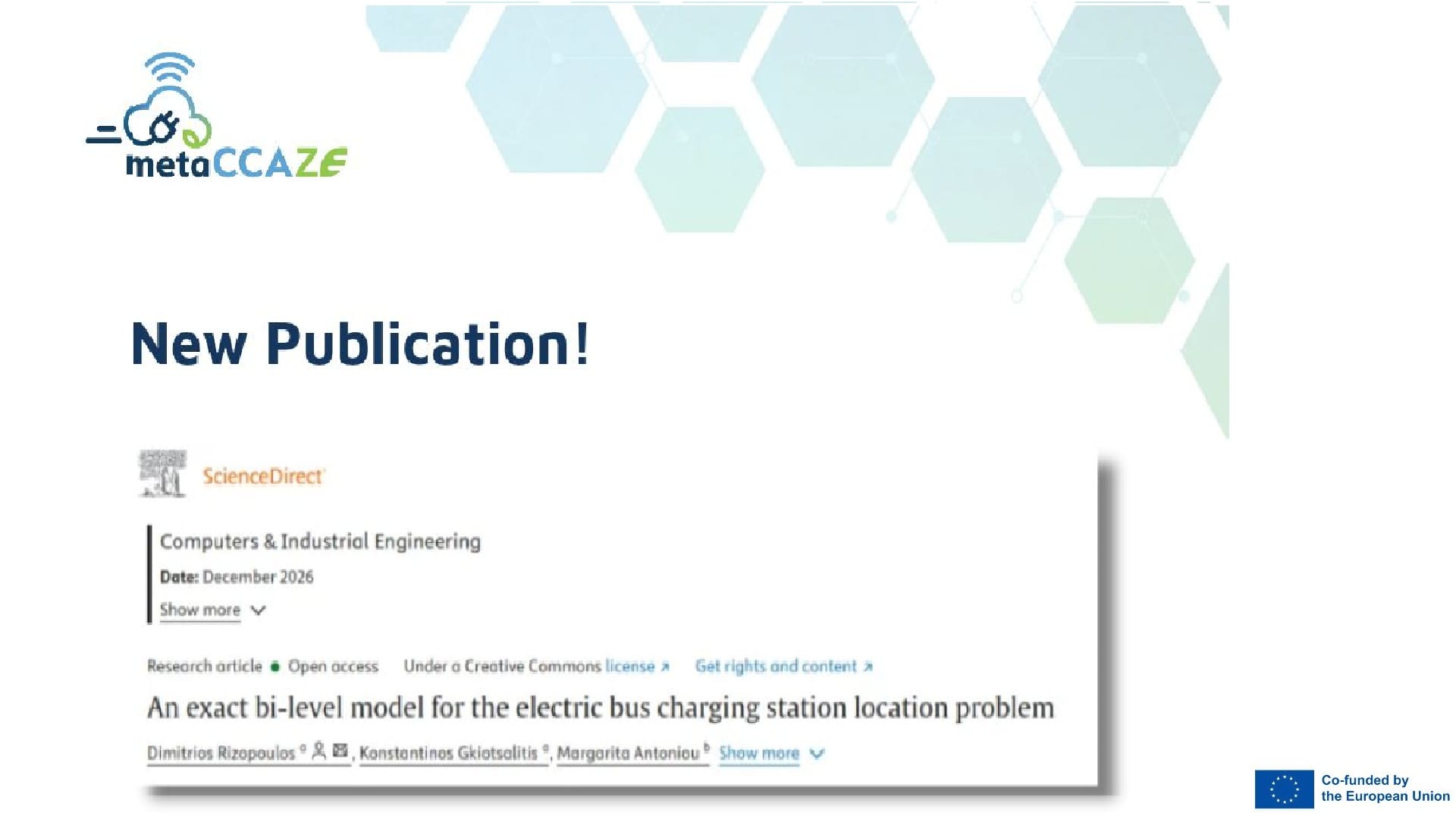
metaCCAZE new publication explores how coordinated charging planning can cut electric bus operating costs
As cities accelerate the transition to zero-emission public transport, one critical question remains: where should electric bus charging stations be located, and how can they be integrated efficiently...
Read more
How ZEvRA is advancing circular composite materials for the automotive sector
The ZEvRA project is helping to accelerate the transition towards circular vehicle manufacturing by demonstrating how high-recycled-content composite materials can meet the demanding technical require...
Read more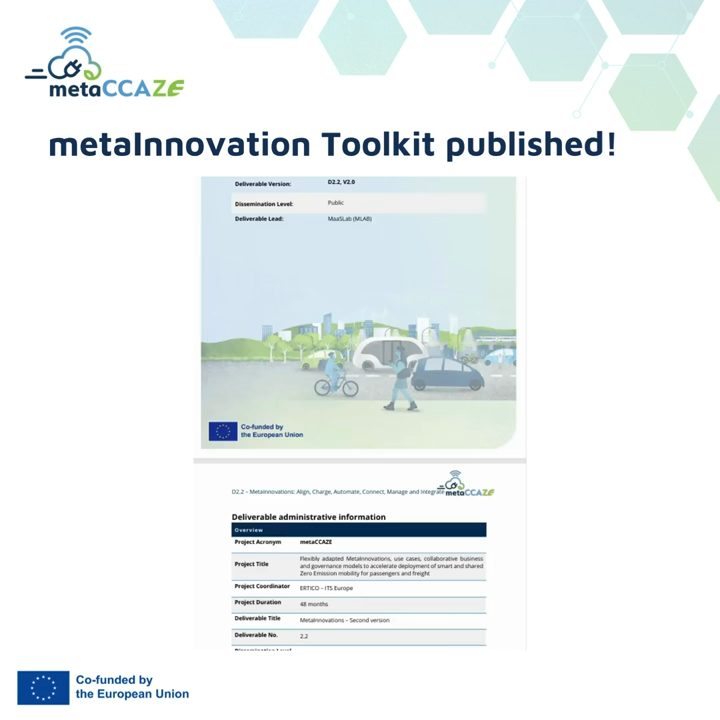
metaCCAZE reports the advances of its innovative mobility solutions
The project metaCCAZE has published a new Deliverable presenting the latest progress of its metaInnovations portfolio. The publication ' D2.2 – MetaInnovations: Align, Charge, Automate, Connect, Man...
Read more