
iBattMan new Deliverable on Battery Management System architecture for next-generation batteries

How do we make batteries not only more powerful, but also safer, longer-lasting and ready for a second life? A large part of the answer lies in the Battery Management System (BMS), the technology that continuously monitors, protects and optimises battery performance.
To address this challenge, the iBattMan project has released a new deliverable presenting the design specifications and architecture of its next-generation Battery Management System. The publication lays the foundations for an intelligent, scalable and future-proof platform capable of supporting advanced battery technologies across a wide range of applications.
The deliverable defines the technical requirements of the BMS, covering communication, measurements, software, cybersecurity, safety, thermal management and second-life considerations. Together, these elements form the digital “brain” of the battery, ensuring that complex battery systems can operate efficiently, reliably and safely throughout their lifetime.
A key innovation of the proposed architecture is the introduction of a dedicated Edge Computing Device. Rather than concentrating all computational tasks inside the BMS itself, iBattMan distributes intelligence across the system, allowing advanced algorithms to run on a more powerful external platform. This approach reflects the evolution of modern vehicle electronics towards domain and zonal architectures, where increased computing power enables more accurate battery monitoring and improved estimation of battery health, state of charge and performance indicators.
The publication also details the main components that interact directly with the battery and describes how the system architecture aligns with AUTOSAR standards. Given the safety-critical nature of battery management, significant attention is dedicated to functional safety, with the first set of safety goals and requirements already established to guide future development.
Beyond architecture design, the deliverable outlines qualification and verification activities at both component and system level, providing a roadmap for validating the platform under real operating conditions.
While some aspects of the final solution will continue to evolve as additional data becomes available from the battery packs developed in the project’s collaborating initiatives, the overall direction is now clearly defined. The next steps will focus on refining the architecture, integrating wireless functionalities, further developing advanced sensing technologies, and strengthening the software environment that will power the Edge Computing platform.
📄 Read the deliverable here
Other Projects
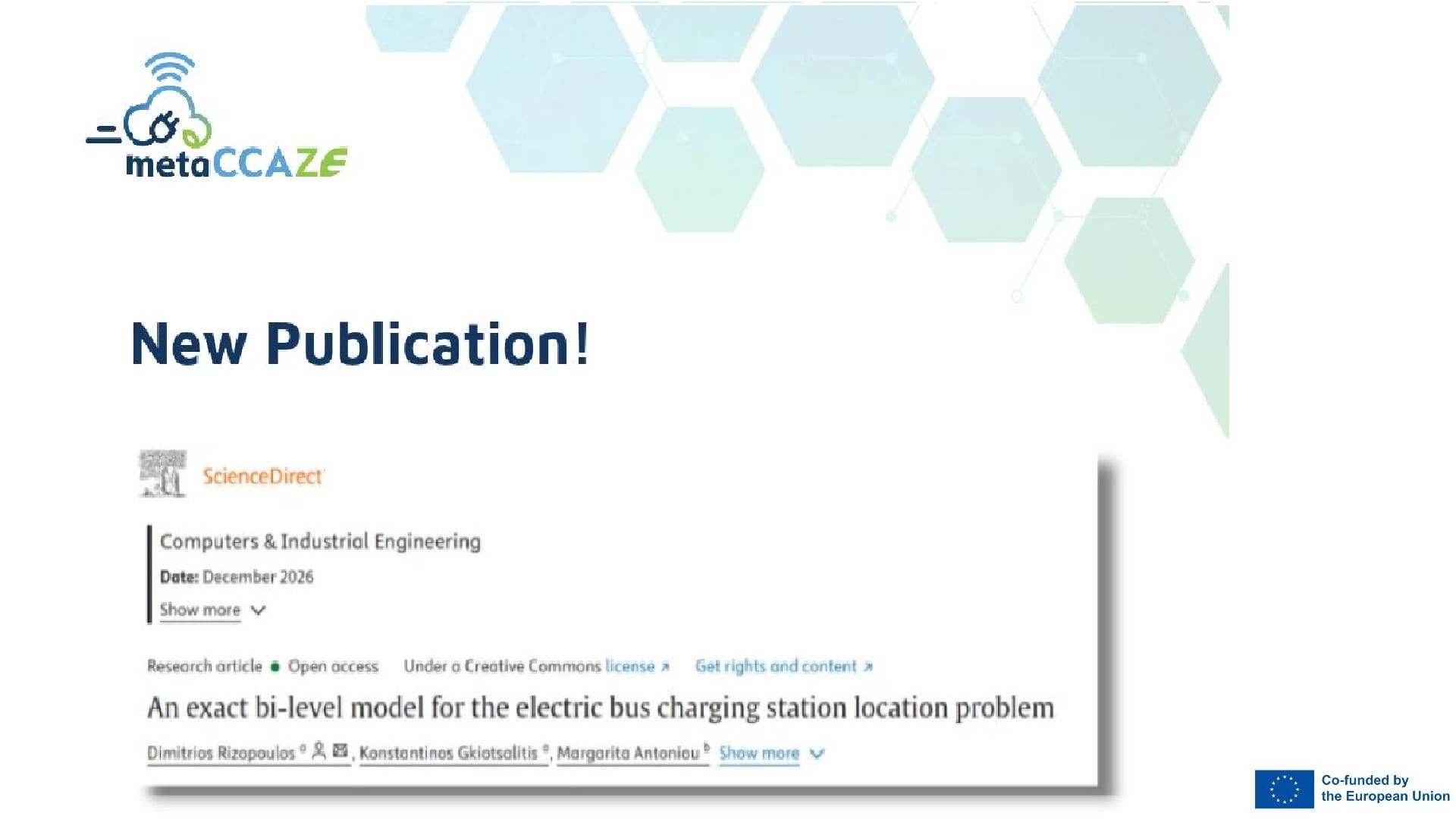
metaCCAZE new publication explores how coordinated charging planning can cut electric bus operating costs
As cities accelerate the transition to zero-emission public transport, one critical question remains: where should electric bus charging stations be located, and how can they be integrated efficiently...
Read more
How ZEvRA is advancing circular composite materials for the automotive sector
The ZEvRA project is helping to accelerate the transition towards circular vehicle manufacturing by demonstrating how high-recycled-content composite materials can meet the demanding technical require...
Read more
metaCCAZE reports the advances of its innovative mobility solutions
The project metaCCAZE has published a new Deliverable presenting the latest progress of its metaInnovations portfolio. The publication ' D2.2 – MetaInnovations: Align, Charge, Automate, Connect, Man...
Read more