New publication from Shift2Zero Project on data-driven surrogate model for electric vehicle cabin airflow analysis

A new scientific publication from the Shift2Zero project presents a data-driven surrogate modelling approach aimed at improving the analysis and optimisation of airflow within electric vehicle cabins. The work contributes to ongoing efforts to enhance passenger comfort while reducing the energy demand of heating, ventilation, and air conditioning (HVAC) systems in zero-emission vehicles.
The study introduces a surrogate model capable of reproducing complex computational fluid dynamics simulations with significantly lower computational effort. By relying on simulation data and advanced modelling techniques, the approach allows for faster evaluation of airflow patterns, temperature distribution, and thermal comfort conditions inside the cabin. This enables more efficient design iterations and supports the development of smarter HVAC strategies.
As HVAC systems represent a major share of auxiliary energy consumption in electric vehicles, improving their performance is essential to extending driving range. The proposed model allows engineers to explore a wide range of configurations and operating scenarios, helping identify solutions that balance comfort and efficiency without the need for time-intensive simulations.
This work reflects the broader objectives of the 2Zero project, which aims to accelerate the transition to climate-neutral mobility through innovation in vehicle technologies and digital tools. By enabling faster and more flexible design processes, data-driven models such as this one can play a key role in bringing more efficient electric vehicles to market.
Access the full publication here
Other Projects
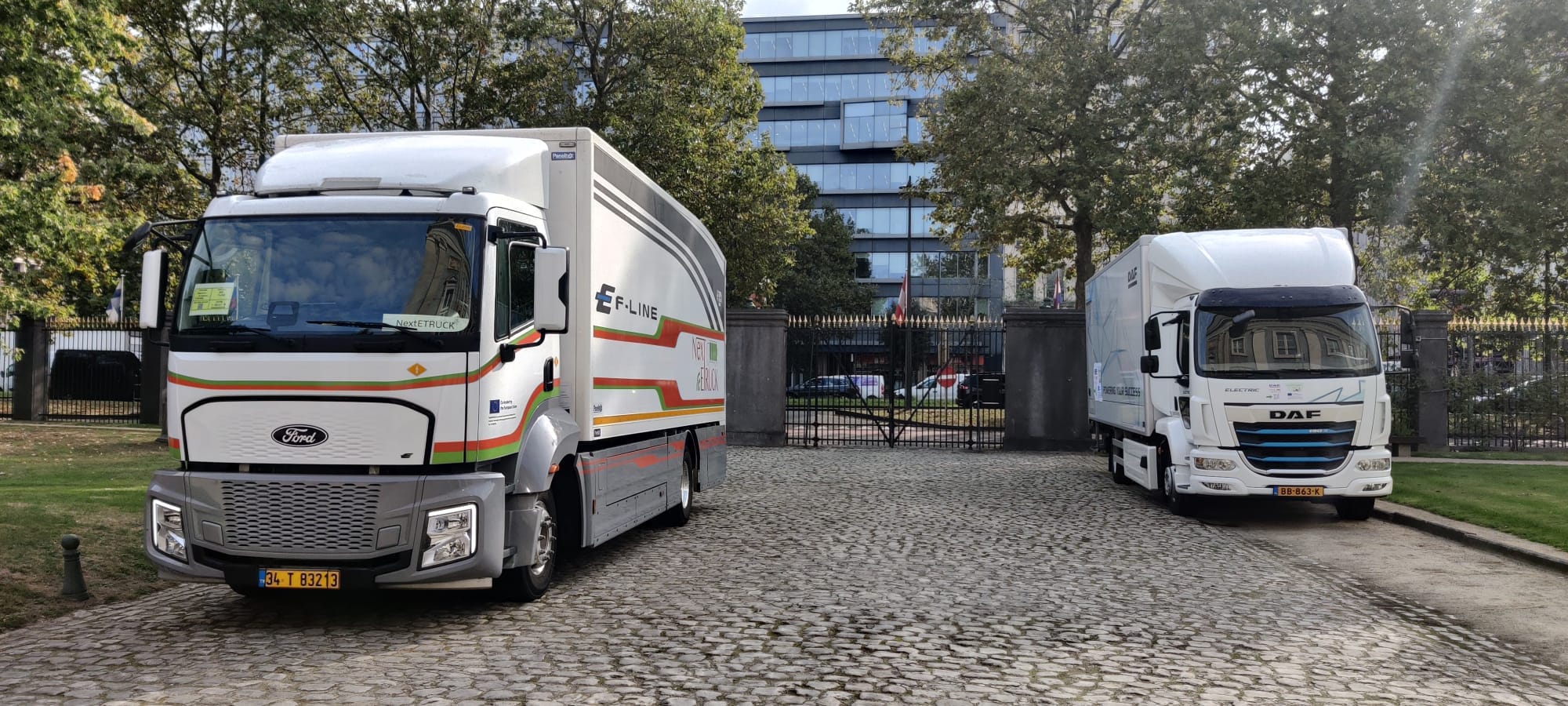
NextETRUCK Final Event: Delivering evidence and insights for the transition to zero-emission freight
The final event of NextETRUCK showcased what four years of demonstration, testing and evaluation can deliver when innovation is assessed in real operating conditions rather than in controlled environm...
Read more
InnoBMS New Publication on V2X Scenarios for Future-Proof Battery Management Systems
The 2ZERO Partnership is pleased to highlight a new open-access publication emerging from the Horizon Europe-funded InnoBMS project. The study, “Analysis of V2X Scenarios for Future-Proof Battery Ma...
Read more
New iBattMan publication advances battery health diagnostics for next-generation EVs
Battery health assessment is one of the key enablers for accelerating the adoption, sustainability, and long-term performance of battery electric vehicles (BEVs). Although current Battery Management S...
Read moreShift2Zero
Current market dynamics in EU reveal a gap between supply - existing N1 vehicles, and demand - evolving needs of urban logistics and climate targets. In 2023, 1.2M new LCV registrations were diesel-po...
Read more