#WeDrive2Zero: Interview with Simon Edwards, LeMesurier project coordinator
Please briefly introduce yourself.
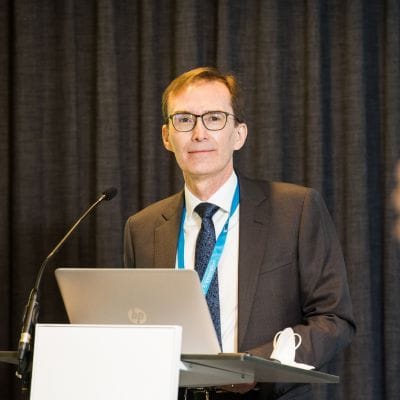
I am Simon Edwards, I have the role of Innovation Director at Ricardo. That is, I work with the various Ricardo business units around the world to drive innovation, realise the funding opportunities thereto and the delivery of large, collaborative programmes. But I also have the pleasure of being a Vice Chairman of ERTRAC and a delegate to the 2Zero Partnership Board. Thereto, I have the honour of chairing the annual Road Transport Research conference at the moment; as well as leading the LeMesurier project.
How is LeMesurier supporting 2Zero in its monitoring activities? Why is it important?
Answering the second question first, misquoting Drucker etc. … “there is no management without measurement”: hence, LeMesurier, its methods and results are helping the management of the 2Zero Partnership.
In more detail, the 2Zero Partnership “measures of success”, its Key Performance Indicators (KPIs) are multiple and various, relating to the three-layer approach for the Objectives of 2Zero, as expressed in its Strategic Research and Innovation Agenda (SRIA). The LeMesurier Coordination and Support Action (CSA) is determining a common framework for monitoring these multiple and various KPIs. It is generating values for the KPIs and their expected variation for the coming decade, based upon the results of the projects being conducted within the Partnership and the assessment of the impact of these projects’ results.
We made a distinction in the list of 2Zero KPIs, that is into Direct KPIs, for which measurements can be extracted from projects reports or from public sources, and Compounds KPIs. The measurement of Compound KPIs is inherently more complex than for Direct KPIs, it requires simulation-based modelling to assess the impact of 2Zero on system aspects of the vehicle parc in Europe, such as its energy intensity or greenhouse gas emissions, over time.
Why do you think the EU should continue supporting R&I activities in decarbonisation of road transport?
Simply, because we are not finished yet, with the (net) decarbonisation of road transport. But, even more importantly, history has shown us that, without continuous investment in (what we now know as) research and innovation, competitiveness, technology leadership from a global perspective cannot be achieved nor maintained. And without that, societies tend to decline over the longer term.
Relating this to road transport, I can only echo what Stephan Neugebauer said at the start of these interviews: we have a strong automotive industry within Europe (I have been pleased to be part of it for over 40 years!); further development requires a systems approach for many different aspects; this sort of approach is enabled through pre-competitive, collaborative action across Europe; as we are achieving through our R&I actions within the EU.
Are there any outcomes or relevant achievements from the 2Zero projects worth highlighting?
Yes, of course, plenty! But allow me to pick just three, related to some of the findings of the LeMesurier project I mentioned earlier. Some of the 2Zero KPIs are “big picture stuff”, for example, there is one (Compound KPI) related to the energy consumption of road transport, where 2Zero should have “the ability of determining, realistically and reliably, the energy intensity of road transport”. To my mind, that has been achieved within LeMesurier, despite it being a major concern during the creation of the Partnership. Naturally, the increasing market share of ZEV within Europe will contribute to reductions in the energy intensity of road transport, as well as to its decarbonisation. But the work of LeMesurier, through the combined use of recognised tools and techniques, has allowed us to make specific projections that can particularly identify the overall contributions of the technology etc., the “2Zero vehicle technology” for example, developed within the Partnership programme to achieve the EC targets, such as a 30% reduction in the energy intensity of personal mobility during the current decade.
Alternatively, LeMesurier is also assessing the 2Zero operation, through some of its Direct KPIs. One of these relates to the amount of funding going through the programme to SMEs, another to the number of organisations actively engaged in projects. At the moment, about 17% of the 2Zero funding is going to SMEs and there are almost 300 organisations actively involved in 2Zero projects.
How would you describe a “2Zero vehicle”?
That’s almost an impossible question to answer, since there will be so many, so many different types. But, in general, a 2Zero vehicle will be clean, carbon neutral, affordable, safer and ready to support society in the EU in the coming decade. Overall, it will be a significant improvement over many of the vehicles on the vehicles on the roads in Europe today. But only if we get the system approach right, since each and every vehicle needs the right system around it.
What are the main learnings from LeMesurier so far, when it comes to the long-term benefits of the 2Zero Partnership as a whole, in 2035 and in 2050?
I relate to what I mentioned above. Firstly, it is (now) possible to measure, to project the specific impact of the 2Zero portfolio of projects through to 2035 and beyond. The LeMesurier team have been doing a good job to make this so. But further, since we are talking about a 40+(!) dimensional field of KPIs, it is possible to measure the majority of these: it takes time and effort, the measurements should be made regularly, through the life of the Partnership and some way beyond, but we can then better manage our current Partnership, and, if desired, others related to different aspects of road transport or the automotive industry.
Based on LeMesurier monitoring, have you identified any R&I gaps? Are there any that will not be addressed in the remaining Work Programmes of Horizon Europe and should be essential topics in the next programming period?
Specific R&I gaps … I am not so sure. Clearly, there are parts of the 2Zero SRIA that are only being addressed in the second part of the Work Programme: for example, circularity. And there is a long way to go there: enough to fill another partnership alone! Other aspects, which are part of the first half of 2Zero, need further work and are rightly being looked at again in the second half, for example the impact of electrification in the operation of the road logistics sector. But perhaps there are some aspects, e.g. L-category vehicles or newer vehicle categories thereby. And, at the other “end” of the system, there is plenty of need for larger scale, ZEV “road transport as a system”, investigations and demonstrations at a pan-European scale, so as to establish system stability and resilience, using all the new tools and techniques digitalisation will offer us in the future.
Looking to the future, what kind of impact do you expect the 2Zero projects to have on European industry and society as a whole?
Speaking as someone who has been a fan of the proper use of statistics in engineering for many years, I guess my answer must be “significant”. If it is not, then we will not achieve the transition, at least not from within, from within the EU. And, bluntly, if the EU cannot achieve this, then society as a whole is at risk.
Towards this end, if I may reference LeMesurier one last time (!), we have also been “looking beyond” the Partnership: the project is assessing the contribution of 2Zero to six Generic Objectives: carbon neutrality, air pollution and health effects, technology leadership, economic growth, European competitiveness and the circular economy. These Objectives are strongly linked to key EU policies, they are constantly interacting with one another within society as a whole. But there is not space to go into LeMesurier further here, now: hence I can only suggest that the reader takes a look at the project website and listens to the webinars and the project’s final event, that we have planned in the Autumn of 2025.