
New publication from FLEXMCS, MACBETH and ZEFES examines the future of Megawatt charging for heavy-duty transport

A new publication developed with contributions from the FLEXMCS project, MACBETH Project and ZEFES examines the key factors influencing the large-scale deployment of Megawatt Charging Systems (MCS) for battery-electric heavy-duty vehicles across Europe.All Project Outcomes
While MCS is increasingly recognised as a critical technology for enabling long-haul zero-emission freight transport, the study highlights that its successful rollout depends on much more than charger performance. Infrastructure deployment must address a complex combination of technical, operational, economic and regulatory challenges affecting stakeholders throughout the transport and energy value chains.
The publication is based on stakeholder consultations, surveys and interviews conducted within the ongoing European projects FLEXMCS and MACBETH. The results reveal significant differences in stakeholder expectations and priorities, shaped by business models, operational requirements and regional conditions.
Among the issues identified are interoperability between charging systems and vehicles, grid connection and capacity constraints, communication standards, thermal management requirements and the planning of charging infrastructure along major freight corridors. These factors directly influence the pace and feasibility of MCS deployment.
The study also places these findings in the context of practical experiences generated by European research and demonstration initiatives, including ZEFES, HoLa and E-Charge. Their results show that long-haul battery-electric freight operations are increasingly becoming technically viable, but that deployment conditions vary considerably across Europe due to differences in grid readiness, land availability, market maturity and regional truck uptake.
A central message emerging from the publication is that Europe has entered a crucial phase in the transition towards zero-emission freight transport. Megawatt Charging Systems have the potential to become the backbone of future charging infrastructure for heavy-duty vehicles, but their widespread adoption will require coordinated action between industry, infrastructure operators, policymakers and grid stakeholders.
The publication therefore calls for an integrated approach combining technological readiness, supportive policy frameworks, targeted investment, digital integration and logistics-oriented infrastructure planning. Such coordination will be essential to build a reliable and interoperable charging network capable of supporting the large-scale deployment of battery-electric trucks across Europe.
Curious to know more? Read the publication here
Other Projects

iBattMan new Deliverable on Battery Management System architecture for next-generation batteries
How do we make batteries not only more powerful, but also safer, longer-lasting and ready for a second life? A large part of the answer lies in the Battery Management System (BMS), the technology that...
Read more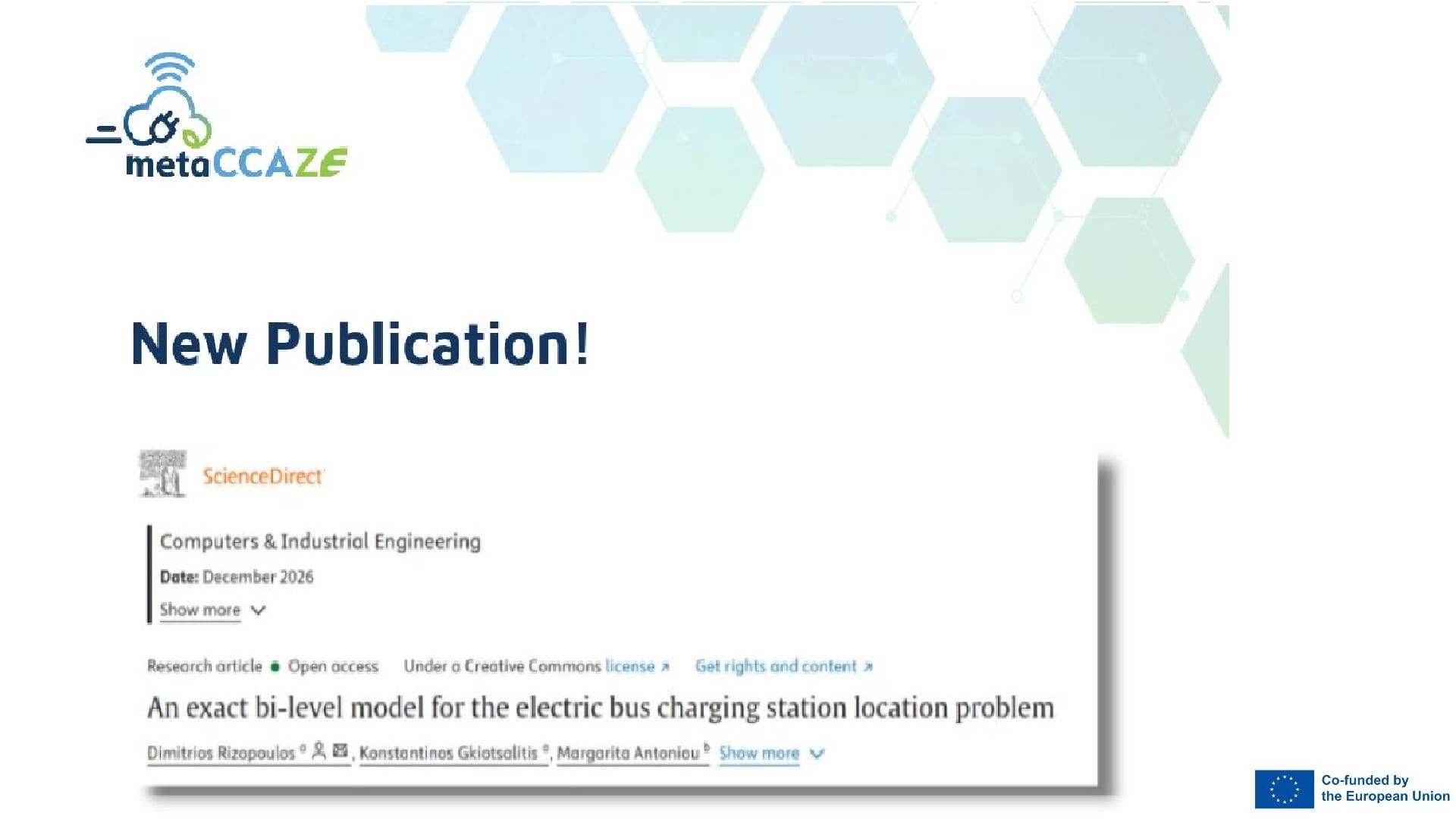
metaCCAZE new publication explores how coordinated charging planning can cut electric bus operating costs
As cities accelerate the transition to zero-emission public transport, one critical question remains: where should electric bus charging stations be located, and how can they be integrated efficiently...
Read more
How ZEvRA is advancing circular composite materials for the automotive sector
The ZEvRA project is helping to accelerate the transition towards circular vehicle manufacturing by demonstrating how high-recycled-content composite materials can meet the demanding technical require...
Read more